
How to start collecting · Part 7 of 8
Blog · · 5 min read
How to start collecting, part 7: keep the record
Cost basis, provenance, photos, and the ledger. Why the history of an item matters more than its price, and how to start the record on day one.
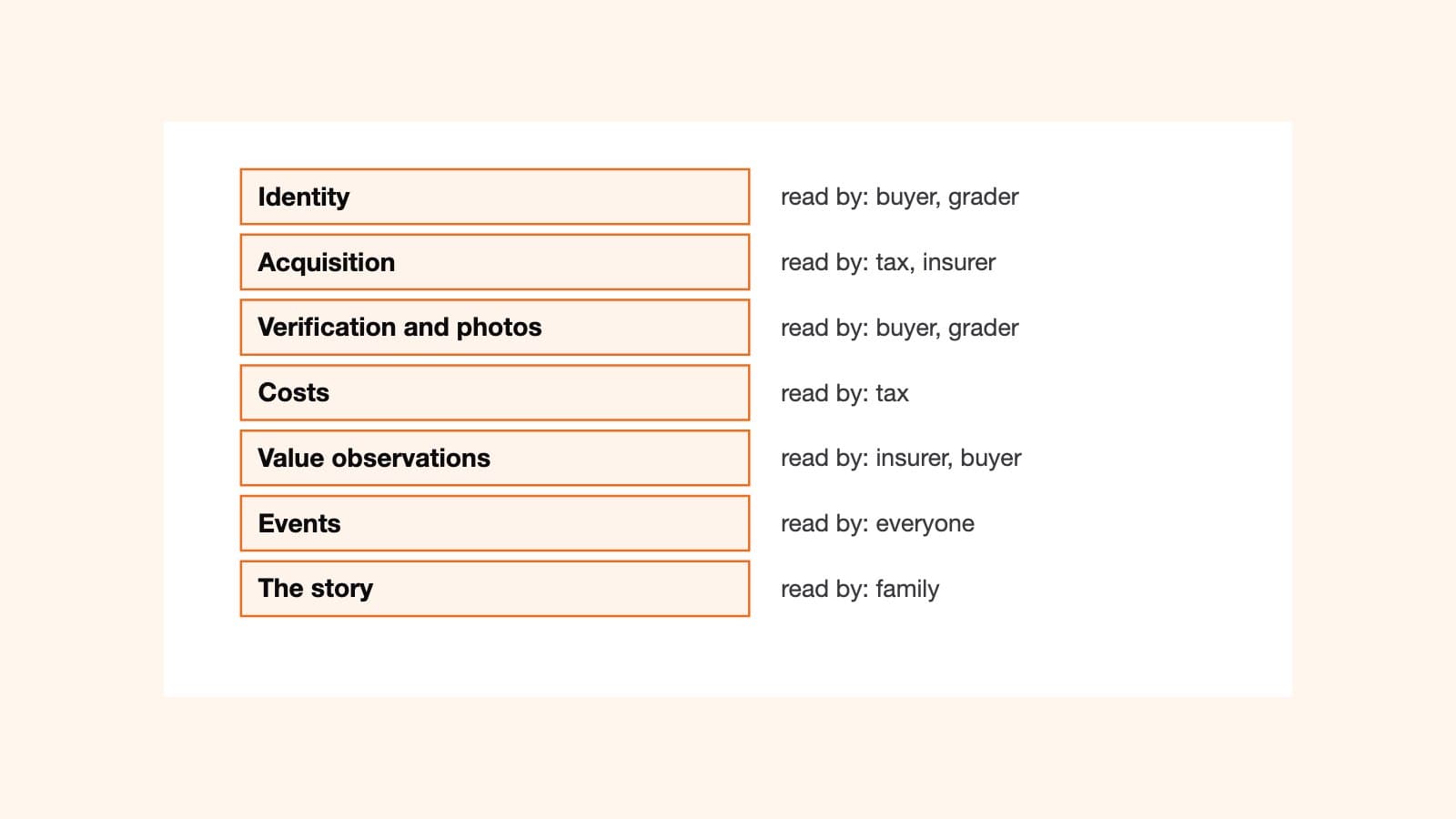
A price is a snapshot. A record is the whole film: what the item is, what you paid and where it came from, when it was graded and verified, the photos that prove it is the same object, and every hand it passes through. The record is what makes an item worth more to the next owner than an identical item with no history. It is also what a tax return, an insurance claim, or an estate will ask you for.
What to capture, every time
- Purchase price, date, and source. The IRS calls this your cost basis, and you will need it when you sell.
- Photos of the front, the back, and the label, taken by you, kept with the item.
- The grader, the cert, and the date you verified it against the registry.
- Any manual value you set, and why.
- Every later event: a regrade, a sale, a trade, a gift.
Why append, never edit
A record you can rewrite is a record nobody trusts. SlabX writes each event as a new line in an item's history and never edits an earlier one, so the ledger reads like a chain of custody. Keep your own record the same way: add lines, do not change old ones.
Taxes, briefly
In the United States, collectibles are capital assets with their own rule: long-term gains on collectibles are taxed at a maximum federal rate of 28 percent, and short-term gains are ordinary income (IRS Topic 409). Cost basis is what keeps you from paying tax on money you never made. Marketplaces send a 1099-K when your sales pass more than $20,000 and more than 200 transactions in a year under the 2026 federal threshold, with lower thresholds in a few states. Part 2 of the next series covers this properly; for now, keep the basis.
Do this week
- Add the purchase price and source to every item you can still remember.
- Photograph front, back, and label of your ten most valuable items.
- For graded items, verify the cert and record the date.
Next: part 8, your first year.
Not financial advice. Collectibles are illiquid and can lose value. Prices and grading fees quoted are as published on the dates named and change often.