
How to start collecting · Part 6 of 8
Blog · · 6 min read
How to start collecting, part 6: what a card is worth
Catalog prices, sold listings, medians, estimates, and why a number without a source is an opinion. The pricing method SlabX uses, explained so you can use it yourself.
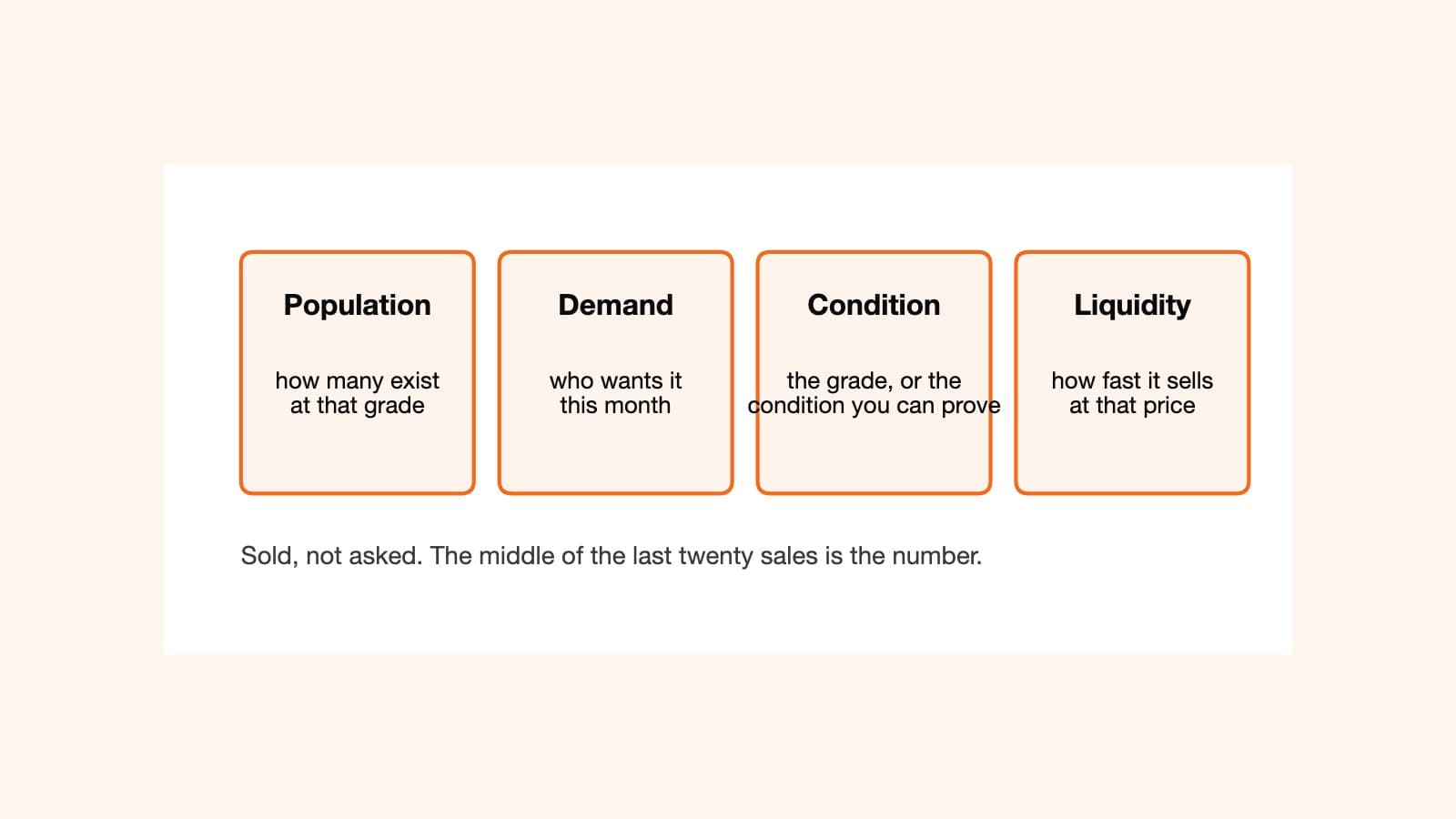
Ask what a card is worth and you will get three different answers: what someone is asking, what someone recently paid, and what a catalog says the market is. Only the second and third are prices. The first is a wish.
Catalog prices
For the big trading card games, marketplaces publish market prices by exact printing: TCGplayer and Cardmarket for Magic through Scryfall, the Pokémon TCG API and TCGdex for Pokémon, YGOPRODeck for Yu-Gi-Oh, Lorcast for Lorcana, the OPTCG catalog for One Piece. These clear thousands of transactions and update daily. They are the best number available for a raw card in a common condition.
Sold listings
Sports cards, graded cards, and anything without a catalog price are valued from recent sold listings on eBay: SlabX takes the median of recent sales with outliers trimmed and labels the result an estimate, because a median of five sales is not the same as a market that clears thousands. The habit for you: sort by sold, not by active, and look at the last five to ten, not the highest one.
Grades change everything
A single grade step can move a price by a multiple, not a percentage, and the population at that grade is why. When you compare prices, compare the same card, the same printing, the same grader, and the same grade. A PSA 9 comp does not price a BGS 9.
Your own number
Some items have no clean comp: a rare variant, an error, a coin with a story. Then you set a value yourself, and the honest thing is to say so. SlabX lets any item carry a manual value and labels it as yours, never mixing it into a total without telling you.
Do this week
- Pick five cards you own and price each two ways: catalog or sold median, and the last asking price you saw. Write both down.
- Notice the gap. That gap is what a seller hopes you will not check.
Next: part 7, keep the record.
Not financial advice. Collectibles are illiquid and can lose value. Prices and grading fees quoted are as published on the dates named and change often.