
Blog · · 4 min read
What the holo pattern tells you
The foil on a card is not decoration. It is a manufacturing signature that changes by era, and it is the part counterfeiters get wrong most.
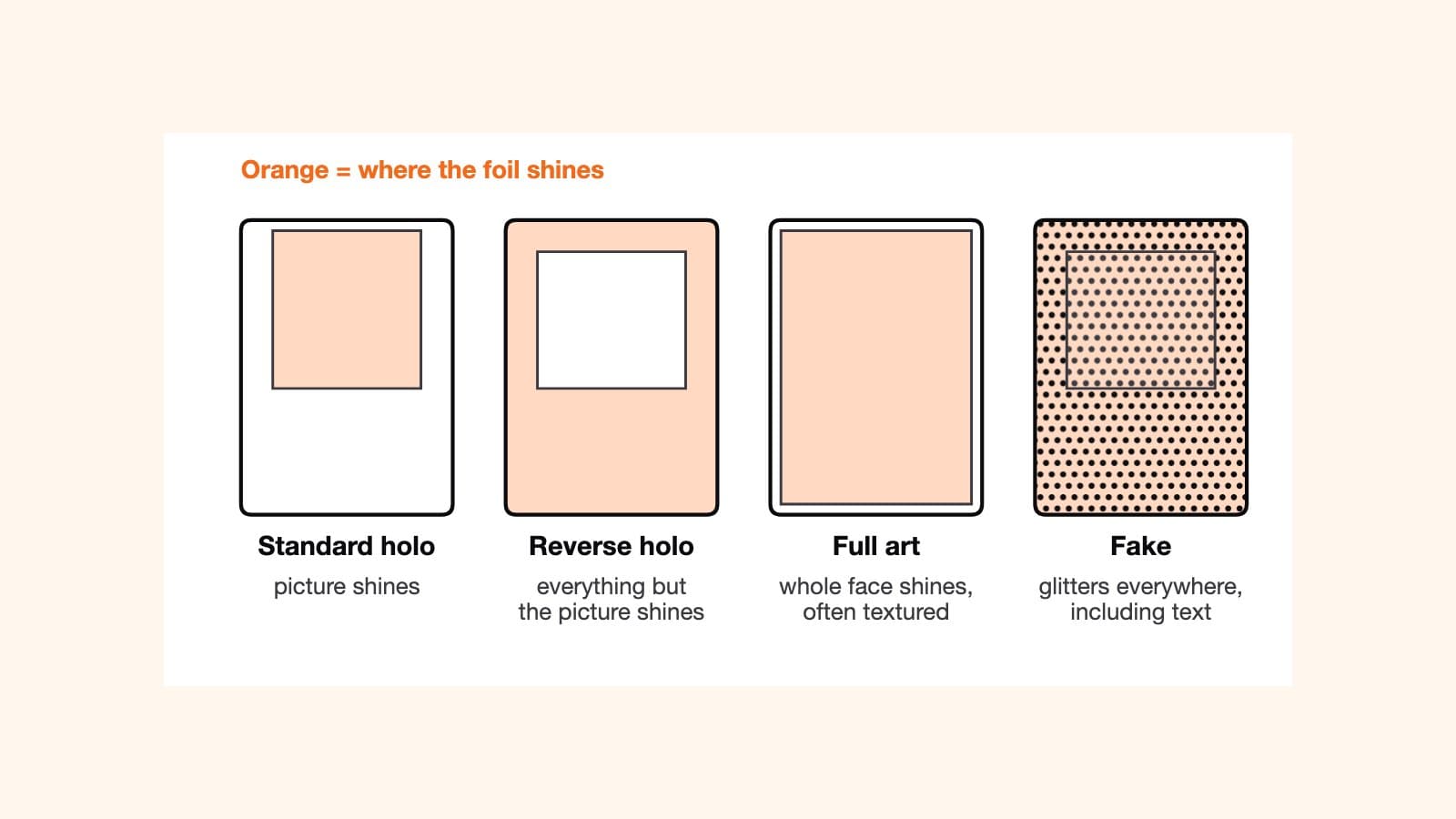
Tilt a genuine holographic card under a light and the pattern moves in a particular way: a field of stars, a sheet of fine lines, a cracked-ice texture, or a swirl, depending on the set and the year. The pattern is set by the foil the printer used, and printers change foil rarely. That makes the holo one of the most reliable signatures a card has.
Read it in three steps
- Know which pattern the set should have. A collector who has handled the set knows; for anyone else, a trusted reference card from the same set is the answer.
- Check where the foil sits. On most cards it covers the art window or the whole face in a defined way. Foil that stops at the wrong place, or covers the text, is a reprint.
- Look at the pattern under a loupe. Genuine foil shows a clean, regular structure. Fakes show a printed imitation of a pattern, flat and blurry at magnification, or a foil sheet glued on with a visible edge.
Texture, too
Many modern premium cards add an embossed texture on top of the foil: fine ridges you can feel with a fingernail and see as a relief under raking light. A textured card that is smooth is not the card it claims to be. This is the fastest check on the most faked modern cards, and it takes a fingertip.
Where this fits
The holo check comes after identity and the back. It rules out a large share of fakes quickly, and it tells you which reference to reach for. Record what you saw on the item's history, with a photo of the tilted card, so the next owner does not have to repeat the work.
Not financial advice. Collectibles are illiquid and can lose value. Prices and grading fees quoted are as published on the dates named and change often.