
Blog · · 4 min read
Struck or cast: the two-second coin test
Genuine coins are struck between dies. Most fakes are cast in a mold. The difference is visible with a loupe and audible with a fingertip.
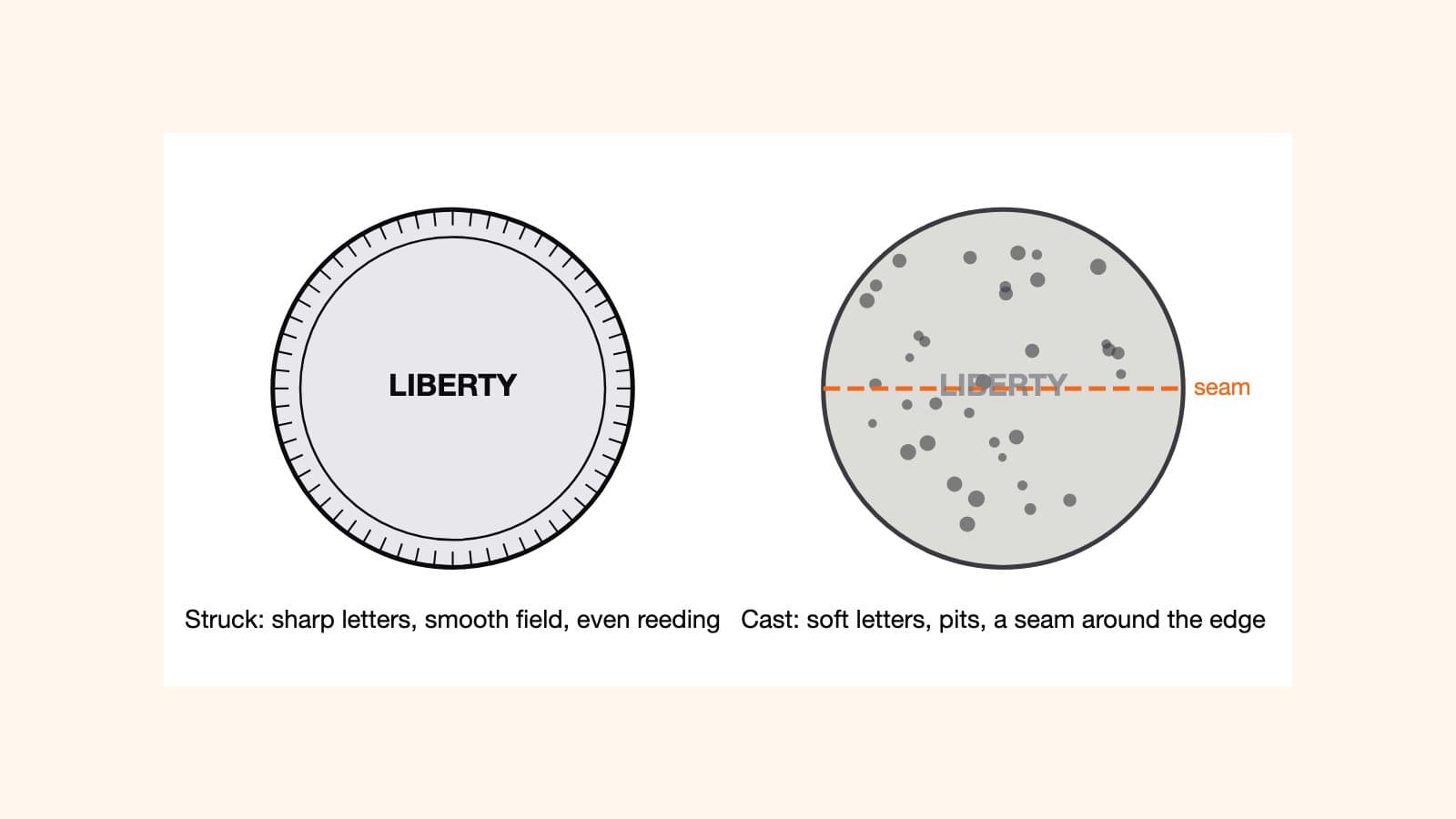
A mint makes a coin by striking a blank between two hardened dies under tons of pressure. Metal flows into the design in an instant, which leaves sharp edges on every letter, crisp fields, and a rim that is square and even. A counterfeiter usually cannot afford dies, so the fake is cast: molten metal poured into a mold taken from a real coin. Casting leaves signs a struck coin never has.
What to look for
- Soft, rounded letters and devices. Casting loses the sharp edge that striking creates.
- Tiny pits or bubbles in the fields, from gas trapped in the mold.
- A seam or a filed line around the edge where the two halves of the mold met.
- A grainy or greasy surface texture under magnification, instead of the fine flow lines of struck metal.
- Weight that is off. Cast alloys rarely match the mint's specification, and a scale that reads to a hundredth of a gram catches them.
The ring
Balance a coin on a fingertip and tap the edge with another coin. Silver and gold struck coins ring with a clear, sustained tone. Cast fakes and base-metal replicas give a dull click. It is not proof on its own, but it takes two seconds and it is right far more often than it is wrong.
When to stop testing
None of these checks damages a coin. Never clean, scratch, or acid-test a coin you think might be genuine; the cleaning alone can cut its value in half. If the checks disagree or the coin is valuable, the answer is a grading service, whose certificate you can look up by number.
Not financial advice. Collectibles are illiquid and can lose value. Prices and grading fees quoted are as published on the dates named and change often.