
Blog · · 4 min read
The three-bucket rule: how much of your money goes into cards
Core, trading, and play. A simple split that keeps one expensive card from becoming the whole collection and the whole risk.
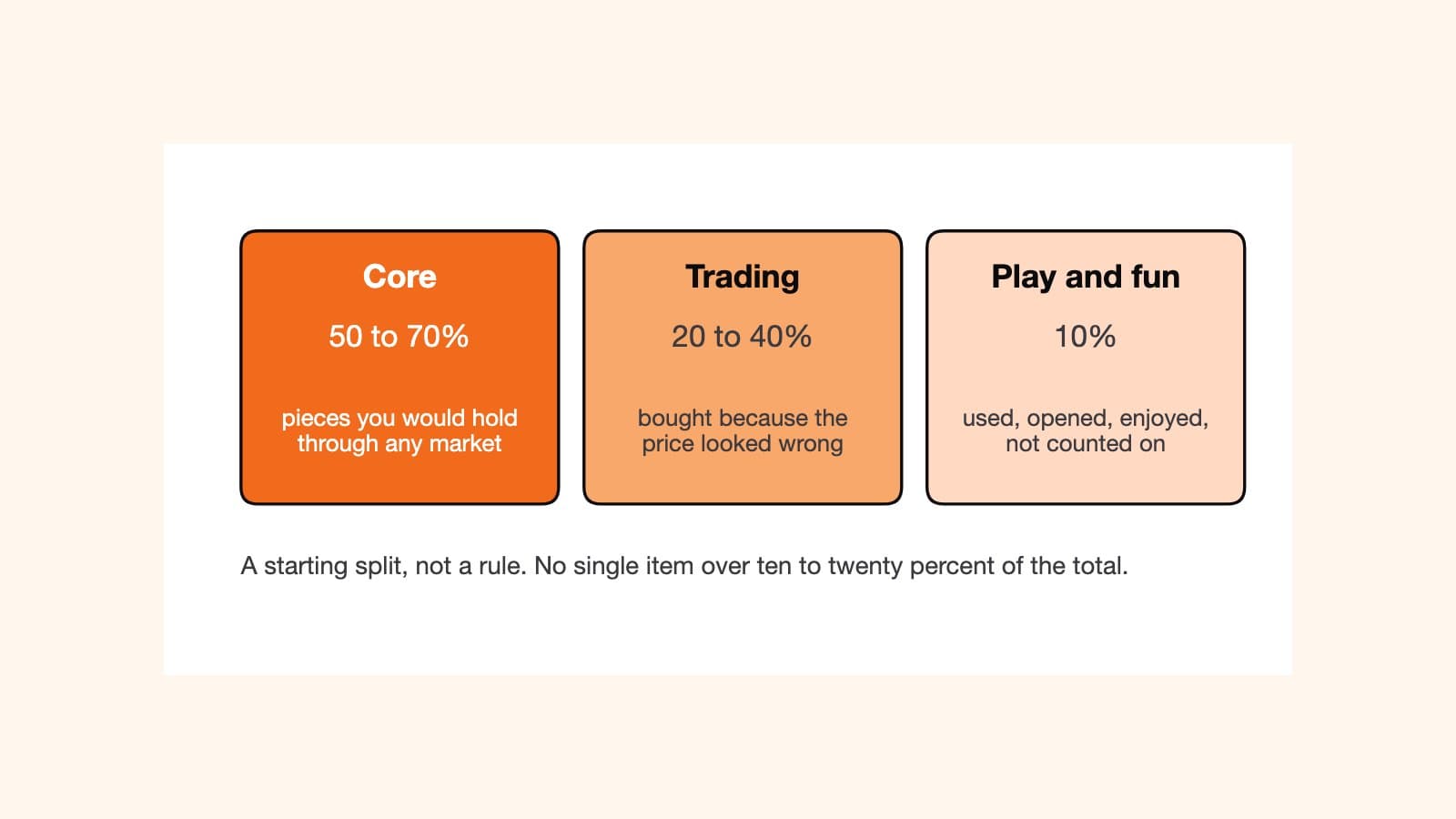
Investors decide how much goes into any one holding before they decide which holding. Collectors rarely do, and that is how a single expensive card becomes the whole collection. The fix is not a spreadsheet. It is three buckets and a limit.
Core
A few pieces you would hold through any market: bought with a record, graded where it pays, insured if they are worth insuring. These are the cards you would pass on. They are chosen slowly and sold almost never.
Trading
Pieces bought because the price looked wrong, meant to be sold when it looks right. Each one is sized so that a total loss is an annoyance, not a problem. If a trading position would hurt to lose, it is too big.
Play and fun
Cards you use, kids' cards, packs opened for the joy of it. Budgeted, enjoyed, and not counted on for a return. Keeping this bucket honest is what keeps the other two honest.
The limit
Set a ceiling for any one item as a share of the collection's value. Ten to twenty percent is a common starting point. Above it, one grading surprise, one lost package, or one market shift in one card moves everything you own. Write the ceiling down and check it twice a year.
Dry powder
Keep part of the year's budget unspent. The best purchases in collectibles happen when someone else needs to sell quickly, and that only helps you if you have cash on the day.
None of this is financial advice. It is the discipline that most people skip, which is exactly why it works.
Not financial advice. Collectibles are illiquid and can lose value. Prices and grading fees quoted are as published on the dates named and change often.