
Blog · · 5 min read
Anatomy of a trading card: the parts every check depends on
Set symbol, card number, rarity mark, copyright line, card stock, and the black core. Know where each one lives and every later check gets faster.
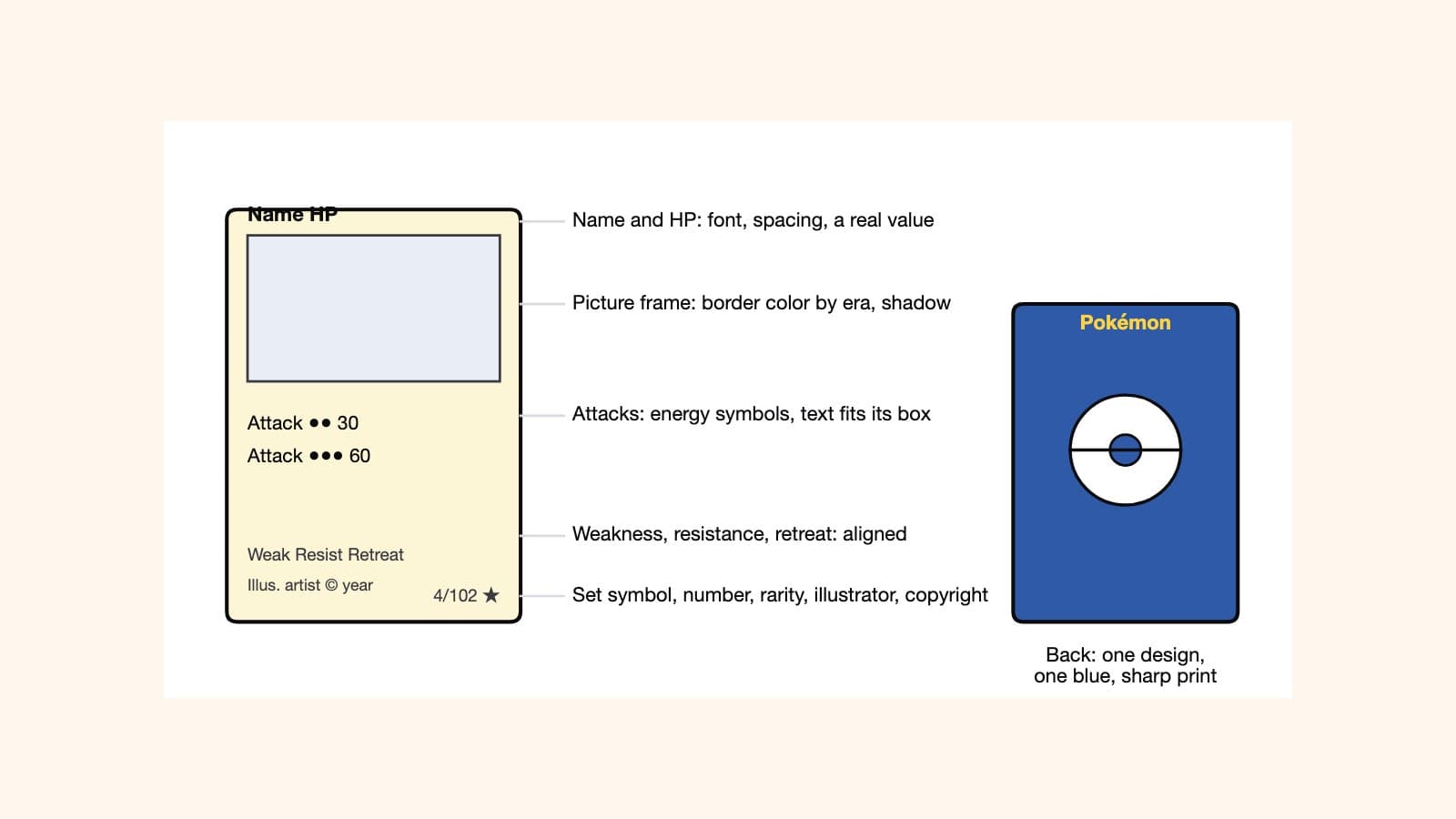
Every authentication check, every grade, and every price starts with the same question: which card is this, exactly? Two cards can share a name and differ by set, printing, language, and finish, and the difference can be a thousand dollars. The answer is printed on the card. You only need to know where to look.
The front
- The name and the art identify the character or player, not the printing.
- The set symbol, usually near the bottom, identifies the expansion. Each set has its own mark, and fakes get it wrong more often than anything else on the front.
- The card number, printed as a fraction or a number with a set code, pins down the exact card inside that set.
- The rarity mark, a small symbol or a word near the number, tells you how the card was distributed.
- The copyright line, tiny text along the bottom edge, names the rights holder and the year. Its font and spacing are consistent within a set and are a favorite place to catch a reprint.
The back
Card backs change rarely, which makes them the best reference you have. The exact shade of the background, the alignment of the printed border, and the sharpness of the small text are the same across millions of genuine cards and are wrong on most fakes. Keep one card you trust from the same era next to any card you are checking and compare the backs before anything else.
The stock
A trading card is a sandwich: printed paper on both faces around a core. In most modern cards the core is opaque, often black, which is why a genuine card held up to a bright light lets almost nothing through while a fake glows. The stock also has a weight and a stiffness that your fingers learn quickly. Handle a hundred genuine cards from one set and the hundred and first that is wrong will feel wrong before you know why.
Why this matters for the record
When you add a card to a collection, the identity you record is the set and number, not the name. That is what a price source needs, what a grader prints on the label, and what a buyer searches for. Get the identity right once and every later check, price, and sale stands on it.
Not financial advice. Collectibles are illiquid and can lose value. Prices and grading fees quoted are as published on the dates named and change often.